Talk to us
Phone:310-855-3688
Fax:310-855-3390

 10390 Santa Monica Blvd, Suite 340
 Phone: 310-855-3688
 Fax: 310-855-3390
 Email: contact@beverlyfertility.com

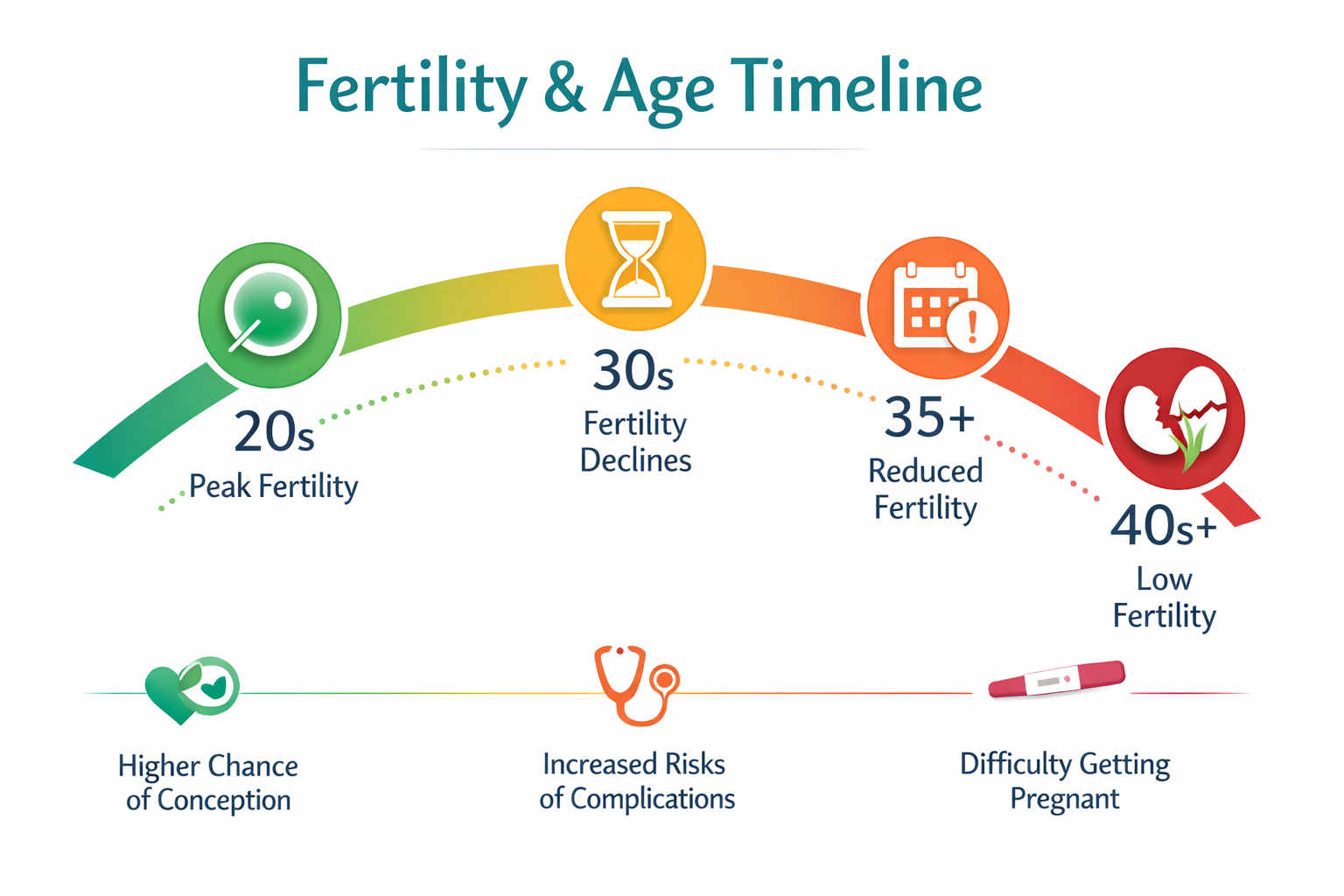
Age is one of the most important factors in fertility, and decades of data pooled from IVF cycles across the country help set realistic expectations for people trying to conceive. Organizations such as ASRM (American Society of Reproductive Medicine) and SART (Society of Assisted Reproductive Technology) have published birth outcome data and IVF success rates according to age to assist patients in understanding their likelihood of success.
In your 20s and early 30s, fertility is at its peak. The chance of natural conception per month is highest during this window, and egg quality is generally strong. For those using fertility treatments like IVF, success rates are also highest, with live birth rates per cycle often exceeding 40–50% for individuals under 35.
Between the ages of 35 and 37, fertility begins to decline more noticeably. Both egg quantity and quality decrease, which can lengthen time to pregnancy. IVF success rates remain solid but begin to drop compared to younger age groups, averaging 30–40% per cycle.
From ages 38 to 40, the decline becomes steeper. Chromosomal abnormalities in eggs increase, raising the risk of miscarriage and lowering live birth rates. IVF success per cycle often falls into the 20–35% range, and many patients require more than one treatment cycle.
After age 40, fertility challenges increase significantly. Live birth rates using one’s own eggs drop below 10–15% per IVF cycle by the early 40s and continue to decline with age. However, options such as donor eggs can dramatically improve success rates, even later in life.
Ultimately, age matters, but it’s not the whole story. Individual health, reproductive history, lifestyle factors, and treatment choices all play a role in fertility outcomes. Early evaluation and personalized care are key factors in improving success at any age.
Fertility naturally declines with age, with the most significant changes occurring after 35 and accelerating after 40. While IVF success rates decrease over time, advances in reproductive medicine — including tailored treatment plans and donor egg options — allow many individuals and couples to achieve successful pregnancies later in life.
If you’re thinking about trying to conceive — now or in the future — don’t wait to get clarity. A fertility evaluation can help you understand your current reproductive health and explore options that align with your goals.
👉 Schedule a consultation with a fertility specialist today to create a personalized plan and maximize your chances of success.
Protected: IVF Cycle Priming: Why Estrace or Birth Control?
March 23, 2026
Protected: Common Fertility Terms Explained
March 2, 2026
Ovarian Cysts and Fertility: What You Should Know
February 23, 2026We understand that you are likely experiencing a variety of emotions regarding starting a family with the help of a fertility specialist. The first information we impart to new patients is that infertility is common and there can actually be several reasons for infertility in a person or a couple. This is why we start with a full workup, so we have a complete picture with which we can base our treatment plans.

By understanding you and your goals for starting a family, we can provide truly individualized care. We aim to guide you through the process so you can make informed decisions and feel confident throughout your treatment process.

10390 Santa Monica Blvd, Suite 340
Los Angeles, CA 90025
Let’s start your parenthood journey here. Ask us how
 Phone:
 Fax:
Fax: Email:
 VIEW MAP