Talk to us
Phone:310-855-3688
Fax:310-855-3390

 10390 Santa Monica Blvd, Suite 340
 Phone: 310-855-3688
 Fax: 310-855-3390
 Email: contact@beverlyfertility.com

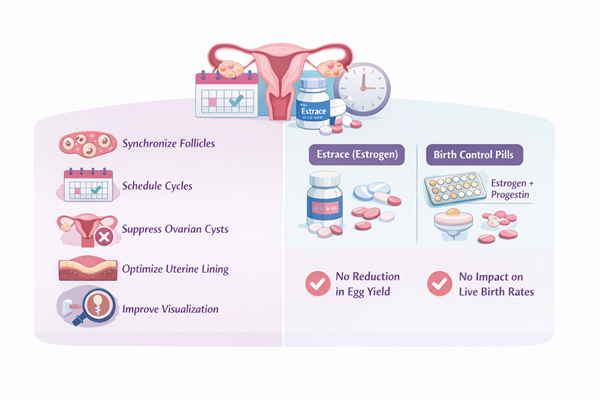
If you have been told to take Estrace or birth control pills before starting an IVF cycle, you may wonder why hormone suppression is used when the goal is to stimulate the ovaries. Although it may seem counterintuitive, fertility cycle priming is an evidence-based approach designed to improve timing, coordination, and overall treatment outcomes.
Cycle priming refers to the use of hormones—typically estrogen alone (Estrace) or combination birth control pills (estrogen + progestin)—before ovarian stimulation.
According to guidance from the American Society for Reproductive Medicine (ASRM), pretreatment is commonly used to:
The goal is to create a controlled and consistent starting point before stimulation begins.
Estrace contains estradiol, a form of estrogen that provides negative feedback to the brain. When estrogen levels are perceived as sufficient, the brain reduces the production of follicle-stimulating hormone (FSH).
Lowering FSH before stimulation allows follicles to develop more evenly, helping them start at a similar size and grow together.
In natural cycles, early elevated FSH levels can lead to uneven follicle recruitment. Estrogen priming helps reduce this variability by:
Combination birth control pills contain both estrogen and progestin, which work together to regulate the hypothalamic-pituitary-ovarian axis.
These hormones suppress gonadotropin-releasing hormone (GnRH), which in turn lowers luteinizing hormone (LH) and FSH levels. LH suppression is typically more pronounced, creating a temporary “quiet ovary” state.
ASRM-supported evidence shows this approach can help with:
Cycle Scheduling and Synchronization
Allows clinics to better coordinate treatment timing and start stimulation in a controlled manner.
Suppression of Ovarian Cysts
Reduces the likelihood of functional cyst formation before stimulation begins.
Endometrial Preparation
Helps thin the uterine lining, improving visibility for procedures such as hysteroscopy.
A common concern is whether birth control use negatively impacts IVF success.
Research shows that while:
There is:
For most patients, cycle priming does not compromise overall IVF success.
Long-term use of hormonal birth control can temporarily affect ovarian reserve markers.
However, this does not necessarily reflect true ovarian reserve. For more accurate testing, it is generally recommended to stop hormonal contraception 2–3 months before evaluation. In some cases, especially when AFC is very low, a longer break may be advised.
Fertility treatment is highly individualized. Some patients—such as those with PCOS, diminished ovarian reserve, or endometriosis—may require tailored approaches.
This may include:
Cycle priming is a strategic tool, and when used appropriately, it helps create an optimized starting point for ovarian stimulation.
If you have questions about cycle priming or your IVF treatment plan, the team at Beverly Hills Fertility is here to help. Our specialists use evidence-based strategies and personalized care to design the most effective approach for your unique needs.
Schedule a consultation today to better understand your treatment plan and take the next step toward building your family with confidence.
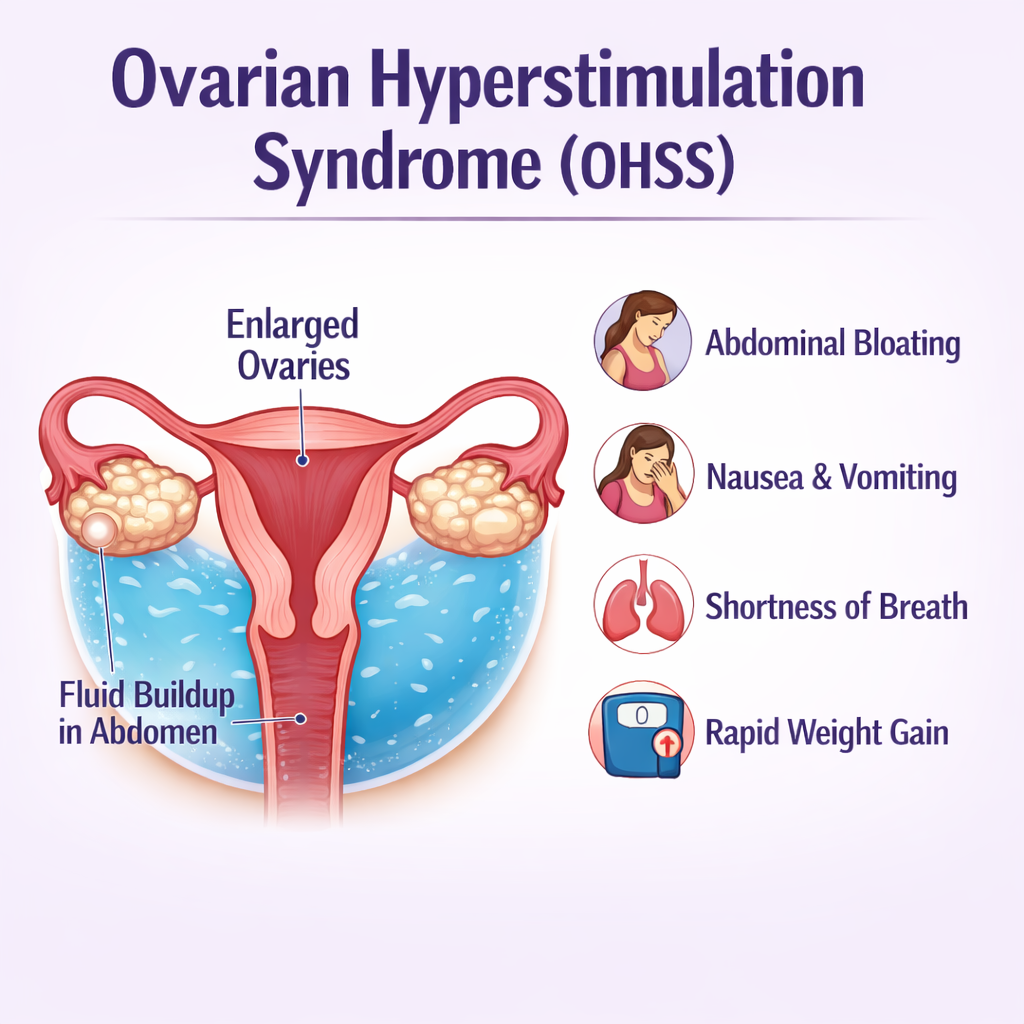
What is Ovarian Hyperstimulation Syndrome?
March 27, 2026
Common Fertility Terms Explained
March 2, 2026
Ovarian Cysts and Fertility: What You Should Know
February 23, 2026We understand that you are likely experiencing a variety of emotions regarding starting a family with the help of a fertility specialist. The first information we impart to new patients is that infertility is common and there can actually be several reasons for infertility in a person or a couple. This is why we start with a full workup, so we have a complete picture with which we can base our treatment plans.

By understanding you and your goals for starting a family, we can provide truly individualized care. We aim to guide you through the process so you can make informed decisions and feel confident throughout your treatment process.

10390 Santa Monica Blvd, Suite 340
Los Angeles, CA 90025
Let’s start your parenthood journey here. Ask us how
 Phone:
 Fax:
Fax: Email:
 VIEW MAP