Talk to us
Phone:310-855-3688
Fax:310-855-3390

 10390 Santa Monica Blvd, Suite 340
 Phone: 310-855-3688
 Fax: 310-855-3390
 Email: contact@beverlyfertility.com

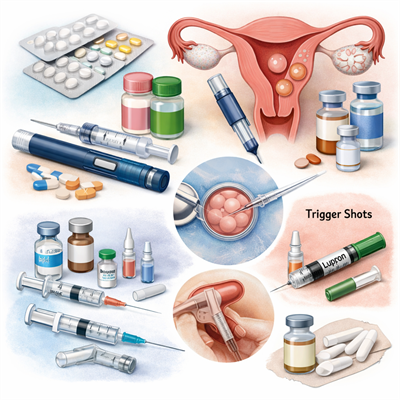
Fertility treatments often involve a carefully coordinated combination of medications designed to support and enhance your body’s reproductive processes. Whether you’re undergoing IVF, IUI, or preparing an embryo transfer, each medication plays a specific role in regulating and optimizing your hormones to create the ideal conditions for ovulation, fertilization, and implantation. Understanding how and why these medications are used can make the process feel more manageable and empowering as you move through your fertility journey.
Clomid and letrozole are both oral medications used to help follicles grow during a treatment cycle. They achieve similar outcomes through different mechanisms. Clomid (clomiphene citrate) works by blocking estrogen receptors in the brain, which tricks the body into producing more follicle-stimulation hormone (FSH). Letrozole, an aromatase inhibitor, lowers estrogen levels, which also leads to increased FSH production. These medications are most commonly used in IUI cycles but can also be used in IVF.
Oftentimes, particularly during IVF, patients use injectable gonadotropins such as Gonal-F, Follistim, or Menopur. These are most commonly used in IVF cycles but can also be used in some IUI cycles. These medications contain FSH (and in the case of Menopur, both FSH and LH).
They directly stimulate the ovaries to grow multiple follicles, which is the goal in IVF— unlike a natural cycle, where typically only one follicle develops. Because multiple follicles are growing, the ovaries can become enlarged, which often leads to bloating and discomfort during treatment.
Trigger shots are used to induce final maturation of the eggs and prepare them for ovulation when the patient is ready for egg retrieval. The trigger shot is usually taken at night, and the retrieval is scheduled about 36 hours later. Two common types of trigger shots are hCG triggers and Lupron (leuprolide) triggers. An hCG trigger shot mimics the body’s natural LH surge and directly stimulates the final maturation of the eggs. A Lupron trigger shot works by stimulating the pituitary gland to release a surge of LH and FSH, which then leads to egg maturation. Lupron triggers are often used in patients at higher risk of ovarian hyperstimulation syndrome (OHSS) because they reduce that risk.
Sometimes, a low-dose Lupron injection is used not as a trigger but throughout the cycle to prevent premature ovulation. This works by suppressing the pituitary gland after an initial stimulation phase. In some protocols, progesterone may also be used to help prevent premature ovulation. This is especially important during IVF, because ovulation would release the eggs before retrieval, and the goal is to collect them directly from the ovaries at the appropriate time.
While oral progesterone is used for preventing premature ovulation, progesterone is more commonly administered vaginally or via intramuscular injection after ovulation. In this phase, it supports the uterine lining and helps prepare it for implantation before and after embryo transfer.
If your doctor uses antagonists during a cycle, these are typically medications like cetrorelix (Cetrotide) or ganirelix. These are GnRH antagonists, which work by immediately blocking GnRH receptors in the pituitary gland. This suppresses the release of LH and prevents a premature LH surge, helping ensure that ovulation does not occur before the planned egg retrieval.
If you’re preparing for fertility treatment or have questions about which medications are right for you, speak with a fertility specialist to develop a personalized plan and move forward with confidence.
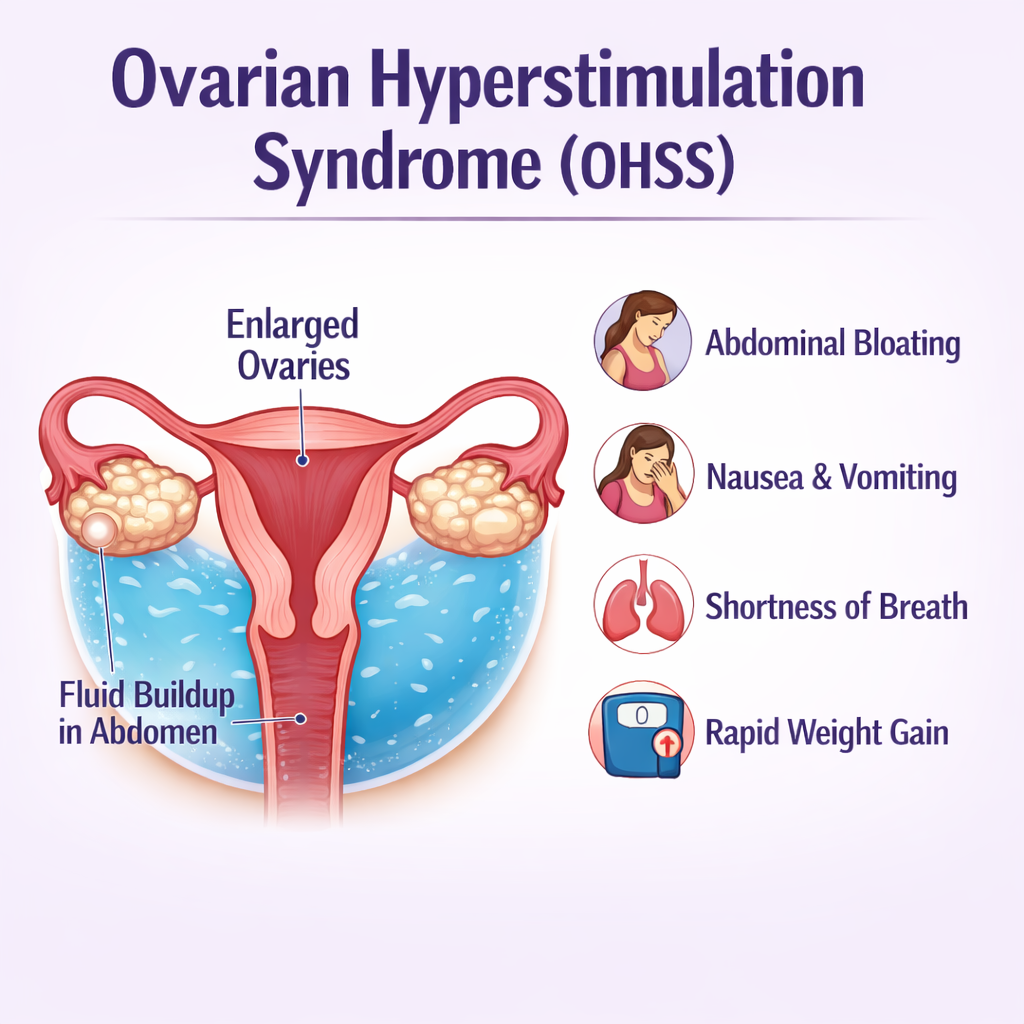
What is Ovarian Hyperstimulation Syndrome?
March 27, 2026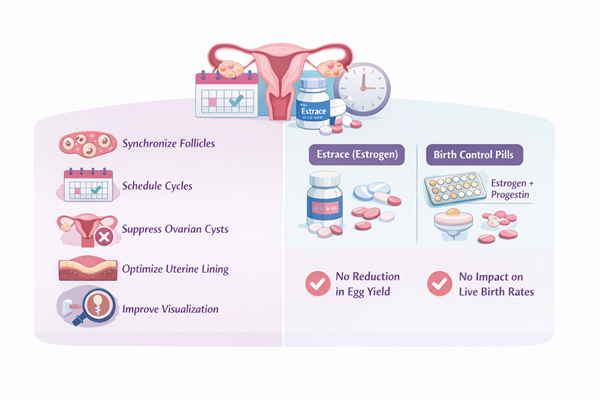
IVF Cycle Priming: Why Estrace or Birth Control?
March 23, 2026
Common Fertility Terms Explained
March 2, 2026We understand that you are likely experiencing a variety of emotions regarding starting a family with the help of a fertility specialist. The first information we impart to new patients is that infertility is common and there can actually be several reasons for infertility in a person or a couple. This is why we start with a full workup, so we have a complete picture with which we can base our treatment plans.

By understanding you and your goals for starting a family, we can provide truly individualized care. We aim to guide you through the process so you can make informed decisions and feel confident throughout your treatment process.

10390 Santa Monica Blvd, Suite 340
Los Angeles, CA 90025
Let’s start your parenthood journey here. Ask us how
 Phone:
 Fax:
Fax: Email:
 VIEW MAP